
Concept case study
Body-powered energy for a compact wearable.
A system-level study exploring how a thermal-energy interface, ultra-low-voltage conversion, adaptive storage and wearable electronics could be integrated into one product.
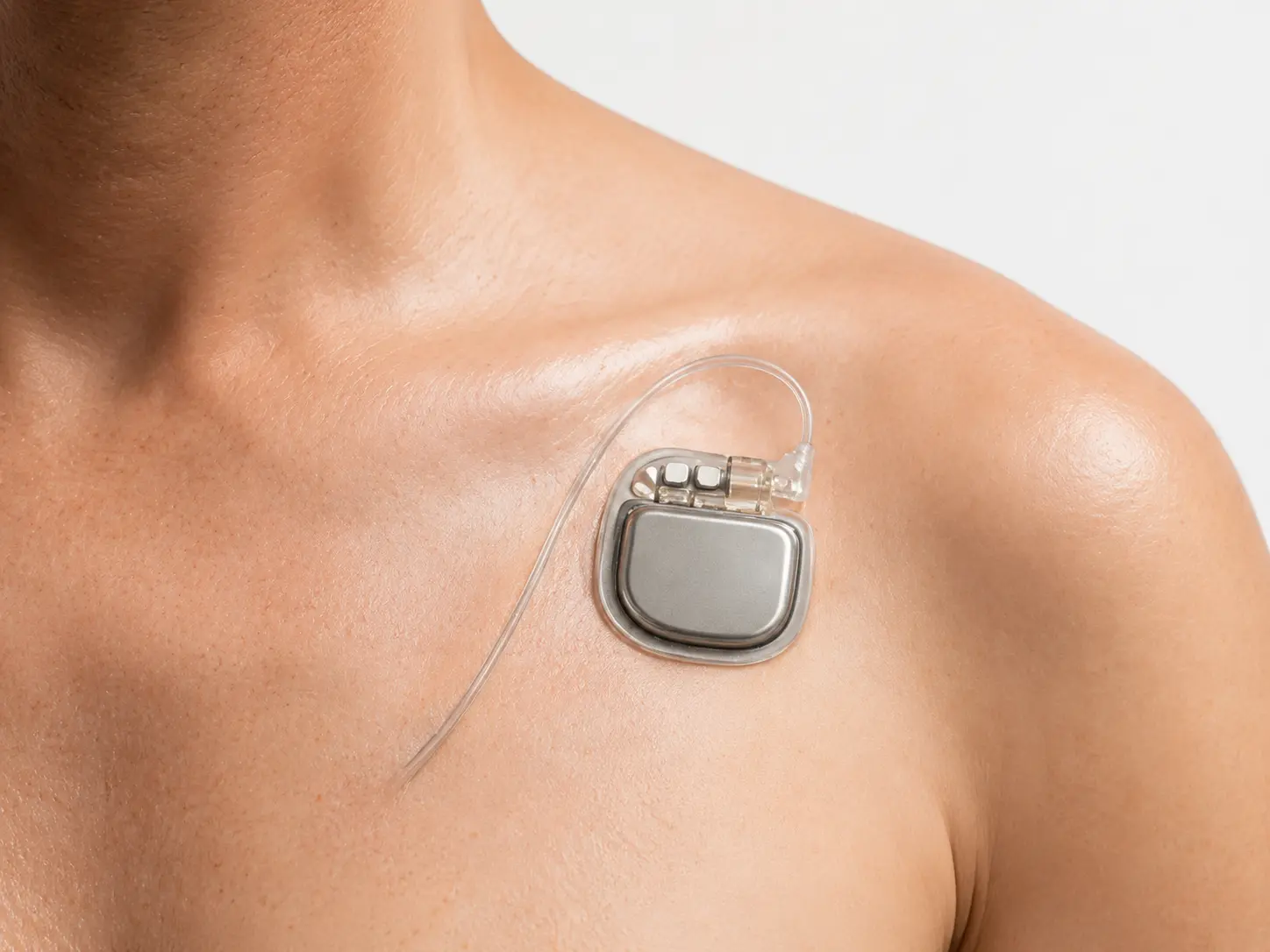
The opportunity
Wearables produce changing loads—and the body provides a small, continuous energy source.
The concept asks whether low-grade body heat can contribute to a closed-loop energy system for an always-on wearable.
Body heat
Low-grade thermal input
Flexible interface
Thermoelectric conversion
Power management
Ultra-low-voltage conversion
Adaptive storage
Conditioned energy reserve
Wearable electronics
Sensing and communication
Concept architecture
A complete energy stack—not only a battery.
The system combines multiple technical layers. Each one is designed around the product’s size, thermal, safety and user-experience constraints.
- 01Flexible thermal-energy module
- 02Thermal interface and comfort layer
- 03Low-voltage power-management board
- 04Adaptive battery module
- 05Wearable electronics and enclosure
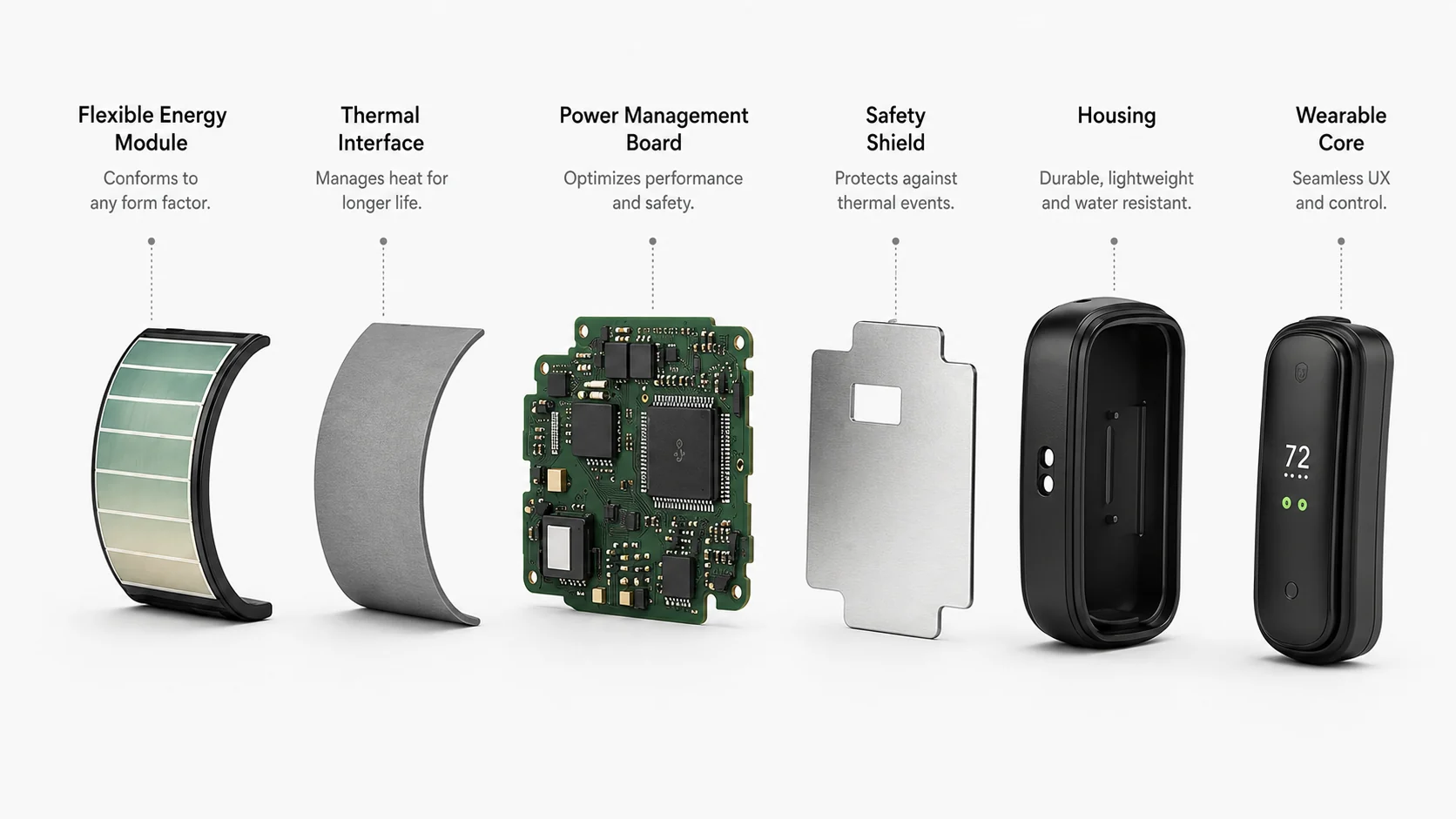
Visual study
Product and architecture, developed together.
The wearable form factor and layered energy architecture are explored as one integrated system.
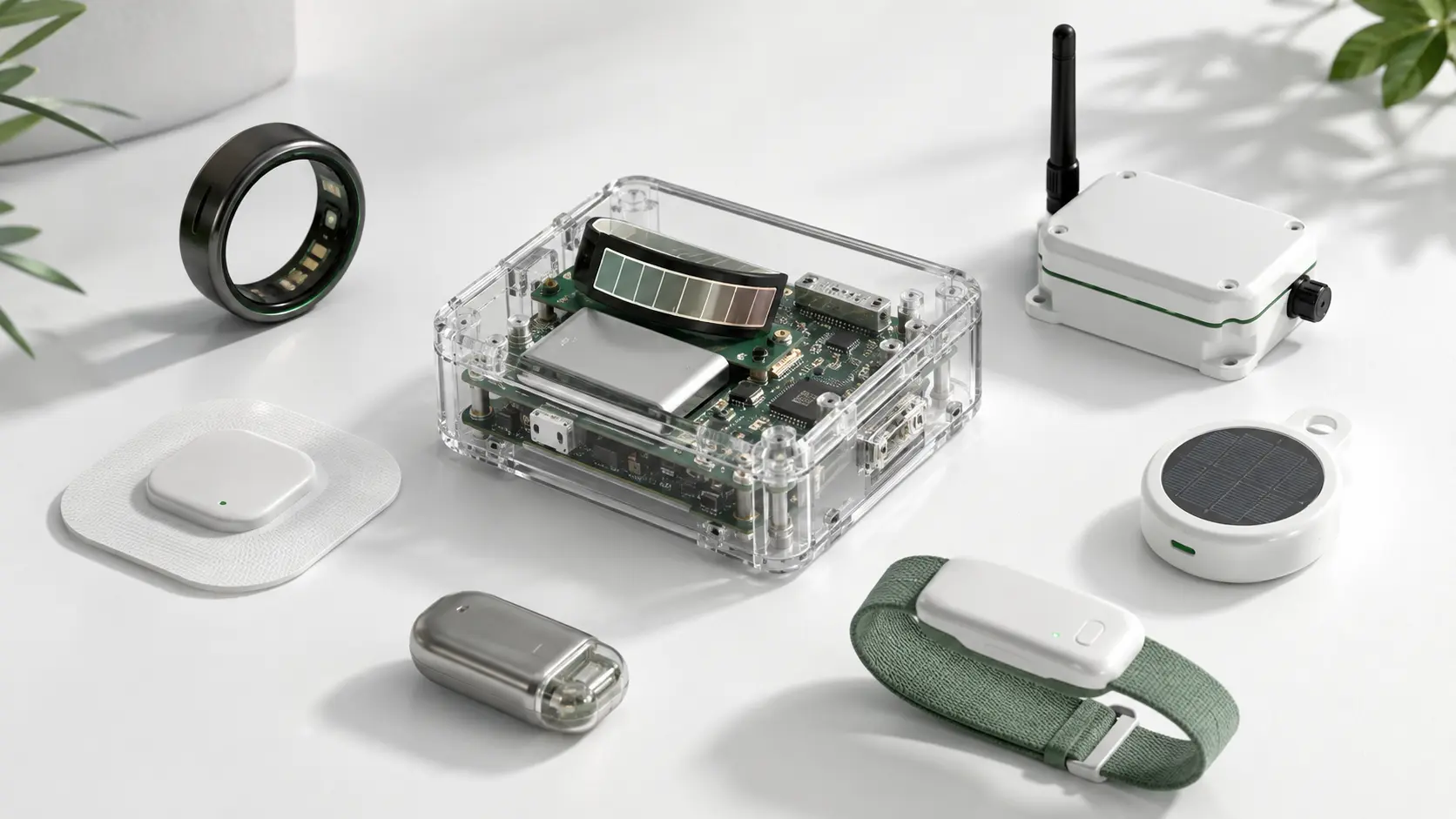
What this demonstrates
A repeatable product-development method.
Research
Understand the energy source and material limits.
Architecture
Model the energy path and operating modes.
Integration
Design electronics, mechanics and user interface together.
Validation
Build measurable tests for the target environment.
A Chidorinow concept study.
This page presents a conceptual application study. It does not announce a commercial partnership with any wearable brand and does not represent a market-ready product.
Create a case study